
Common repairs, $150–$600
Elements, thermostats, thermocouples, relief valves: the parts that actually fail, fixed in a single visit. Most no-hot-water calls land here.
Cold water at 6am feels terminal, but the autopsy usually finds a $40 part, not a dead system. We test before we talk replacements, carry the common failures on the van, and put Burwood Heights households back under hot showers the same day, saving the new-system quote for tanks that have honestly earned one.
The hot water trade has a thumb on the scale: a replacement invoices ten times a thermostat, and the customer is standing in cold water wanting it over. So "needs a new system" gets said a lot to people whose element died. The actual failure list is mundane and mostly cheap, elements and thermostats on electric tanks, thermocouples and pilots on gas, sensors and flow faults behind a continuous-flow unit’s error code.
Our order of operations in Burwood Heights never changes: instruments first. Elements get metered, gas sequences get checked, codes get read. When the verdict is a part, you get the part today. When a cylinder is genuinely finished, weeping seams, hot-side rust, double-digit age meeting a big repair: you get the repair quote and the replacement quote side by side with our reasoning, and the choice stays where it belongs: with you.
Burwood Heights’ interwar and Federation homes still run original earthenware pipework that cracks and collapses as it ages.
In older homes the hot water unit is often in an awkward spot, a narrow side passage, under a back stair, in a cupboard that was built around it. That was fine when it went in and it is a real constraint when it comes out.
Access affects both the cost of replacement and which units will physically fit. We measure the route before quoting rather than after, because a system that cannot be carried to the location is not an option however good the price.
Burwood Heights runs a mixed stock, 48.1% separate houses and 36.3% flats by the ABS 2021 Census, so there is no standard hot water job here: a freestanding home and a unit in a block need different systems in different positions.
A period home has almost never got its original hot water arrangement. What it has is whatever was fitted at the last renovation, connected into pipework of a completely different era, and that junction is frequently where problems start.
Galvanised pipe feeding a modern unit will keep delivering rust and restricting flow regardless of how new the heater is. Replacing the unit without addressing the feed solves less than people expect.
Weak hot water in an older home is often diagnosed as a failing unit when the actual cause is the pipe leading to it, decades of internal corrosion narrowing the bore.
The test is simple: if the cold is strong and the hot is weak, the fault is on the hot side, and if the hot has declined gradually over years rather than suddenly, it is far more likely to be pipe than heater. Worth establishing before buying a new system.
Three things decide it: the age of the unit, the cost of the failed part, and whether the cylinder itself is sound. A tank under about eight years old with a failed element, thermostat or valve is almost always worth repairing.
A tank that has rusted through is finished, and no part saves it. We would rather tell you that than sell a repair that buys a month, and you should expect to be shown why, not just told.
Inside every storage cylinder is a sacrificial anode that corrodes so the steel does not. When it is consumed, the tank starts consuming itself, and that is the point of no return.
Replacing an anode costs a fraction of replacing a tank and roughly doubles its service life. Almost nobody does it, because almost nobody is told it exists, which is why it is here rather than in the fine print.
No hot water is listed among urgent repairs under NSW residential tenancy law. The landlord or agent must arrange it promptly, and your first call is to them.
If they cannot be reached, tenants can arrange urgent repairs up to a legislated limit and seek reimbursement. Keep the invoice and a record of your attempts to contact them, we itemise ours with times so it holds up.
A tank that is leaking or making noise is holding heat and pressure, and it deserves respect rather than investigation. Close the cold water inlet at the top of the unit if you can reach it safely, and switch off its power or gas.
Beyond that, leave it. Whether it needs attention tonight depends on where the water is going, onto the ground outside is a morning job, into a wall, ceiling or cupboard is not.
Elements, thermostats, thermocouples, relief valves: the parts that actually fail, fixed in a single visit. Most no-hot-water calls land here.
Gas valves, control boards on continuous-flow units, and bigger jobs on systems still worth the spend.
Like-for-like replacement when the tank is done. Gas storage runs $1,200–$2,200 installed.
Endless hot water, no tank to rust, and it frees the space the cylinder occupied.
After rebates. Costs the least to run of the lot, worth the numbers conversation on any replacement, not just the green one.
Repair and replacement prices arrive together when the tank is marginal, you decide with both in hand. Figures here are indicative of the 2026 Sydney market rather than a quote from us, you get your own number as a fixed price before any work starts.

System type, rough age, what it is (not) doing: enough to load the likely part before the van leaves, which is what makes same-day real.
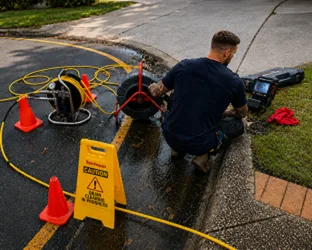
Elements metered, gas sequences traced, codes decoded. Diagnosis is a measurement, not a sales opportunity.
A live part gets fitted then and there. A dying tank gets you both prices, the reasoning, and zero pressure.
Repairs run same-visit; standard replacements called in early usually shower hot the same evening, installed to spec, old unit gone.
Call before 10am and in most cases the water is hot again tonight. Describe the system and we bring the likely fix on the van.
Instruments before invoices, parts before replacements, and a fixed price before either.

Leave your details and our local Burwood Heights team will call you back fast.