
Basic detection, $200–$400
Straightforward jobs: a limited pipe run, good access, the leak confirmed and marked.
The water bill knows something you don’t. Somewhere under a slab or behind a wall in Burwood Heights, a pipe is quietly feeding the ground, and finding it with instruments instead of a jackhammer is the difference between lifting three tiles and gutting a bathroom. We locate to centimetres, then repair through one deliberate hole.
Every concealed leak makes three things: a sound, a temperature difference, and a pressure drop. The gear reads all three. Acoustic equipment listens for the specific frequency of water escaping under pressure and gets louder as we track along the line; thermal imaging paints the wet path through a wall or the warm plume of a leaking hot line under a slab; and isolating sections of pipework against a pressure gauge proves exactly which run is losing water and which is sound.
Cross-referenced, they put an X on the floor within centimetres. That precision is the entire point, the difference between lifting three tiles and re-tiling a bathroom. It matters double under Burwood Heights’s older homes, where pipes wander in ways no plan ever recorded, and the "obvious" place to dig is reliably wrong.
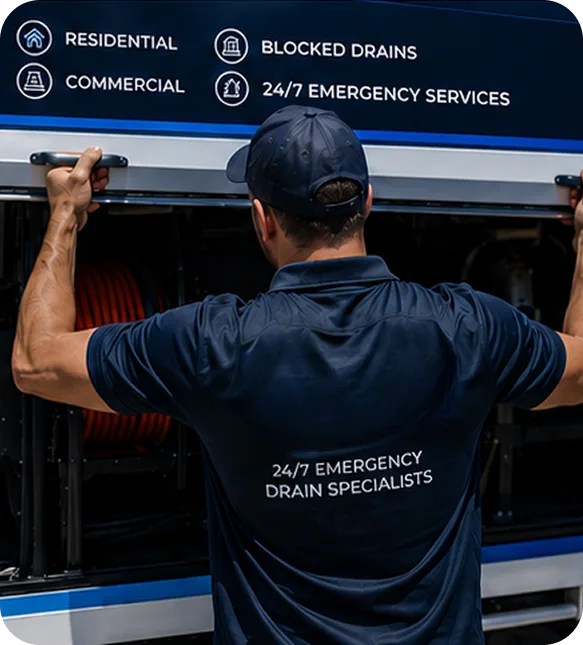

A leak beneath a concrete slab is the one everybody dreads, and the dread is mostly about the excavation rather than the plumbing.
The heavy clay soil beneath Burwood Heights swells and shrinks through wet and dry spells, shifting and fracturing buried drainage lines.
Which is exactly why locating it precisely is worth paying for. Acoustic listening, thermal imaging and tracer gas will normally place a slab leak inside a small area, the difference between cutting one section of floor and exploring several.
Older houses have rising damp, failed flashings, blocked subfloor vents and perished mortar, all of which produce symptoms that look exactly like a leak.
Burwood Heights’ interwar and Federation homes still run original earthenware pipework that cracks and collapses as it ages.
Establishing which one you have is worth doing before any pipe is repaired. A moisture profile that peaks at floor level and falls with height points at rising damp; one that peaks at a fixture or a pipe run points at plumbing.
A cracked earthenware line leaking into its own trench washes out the bedding supporting it. Losing support, the pipe sags; sagging, it holds water; holding water, it collects solids and eventually blocks.
Which is why a drain that has begun to block regularly and a drain that is leaking are frequently the same drain at different stages. Finding it early is considerably cheaper than finding it once it has collapsed.
Long-running leaks in reactive soil often announce themselves through the structure rather than the plumbing: a door that has started binding, a hairline crack above a window, floor tiles lifting in one corner.
Those are worth mentioning when you call. A pattern of movement in one part of the house tells us where to look before a single instrument comes out of the van.
Burwood Heights is a small residential pocket of Sydney’s Inner West (postcode 2136), sitting between Burwood, Croydon Park and Enfield. Its quiet streets are lined with interwar and Federation homes on settled blocks, solid houses whose original drainage is now well past its prime, and we know the local ground well.
Lath and plaster, pressed metal ceilings, original tiling and heritage listings all raise the cost of being wrong. In a period home the value of precise location is not the plumbing saved, it is the finishes not destroyed.
So we locate to the smallest area the equipment will support, and where a listing is in play we document what we propose to open before anything is touched.
Straightforward jobs: a limited pipe run, good access, the leak confirmed and marked.
The standard concealed-leak hunt with the full kit on site, acoustic, thermal, pressure testing.
Long pipe runs, poor access or multiple leaks add gauge-and-listen time past the first hour.
Deep slab lines and complex multi-storey tracing sit at the top of the Sydney range.
Detection tells you exactly what the repair involves, so the repair quote is built on evidence. One crew does both, no handover, no second call-out fee.
Weigh it against the alternative: exploratory demolition starts at more than detection costs, and it starts in the wrong place. Figures here are indicative of the 2026 Sydney market rather than a quote from us, you get your own number as a fixed price before any work starts.

The meter test, done properly, plus your bills and history. If the evidence says no supply leak, you hear that, not a bill for finding nothing.
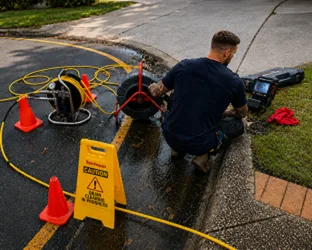
Pressure-testing the pipework in sections, hot against cold, line by line, corners the leak into one run before any listening starts.

Acoustic gear and thermal imaging along the guilty run until the readings converge. The mark on the floor is where the repair happens, centimetres, not metres.
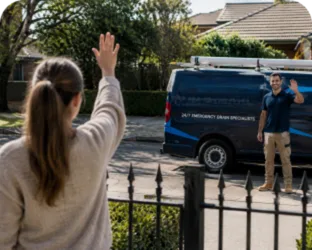
Access exactly at the mark, the failed section repaired, pressure-tested, closed up. If the line's condition says reroute instead of repair, you get both numbers first.
Then the leak is real and already on the clock. Book the detection before it surfaces somewhere expensive.
Non-invasive detection, evidence before quotes, and one crew for the find and the fix.

Leave your details and our local Burwood Heights team will call you back fast.